



Go West? Not Yet.
California gets the gold-rush shorthand. Georgia has an earlier chapter, a former federal mint and an October festival built around it. In Dahlonega, the distance between a fall afternoon and a complicated history is one courthouse doorway.
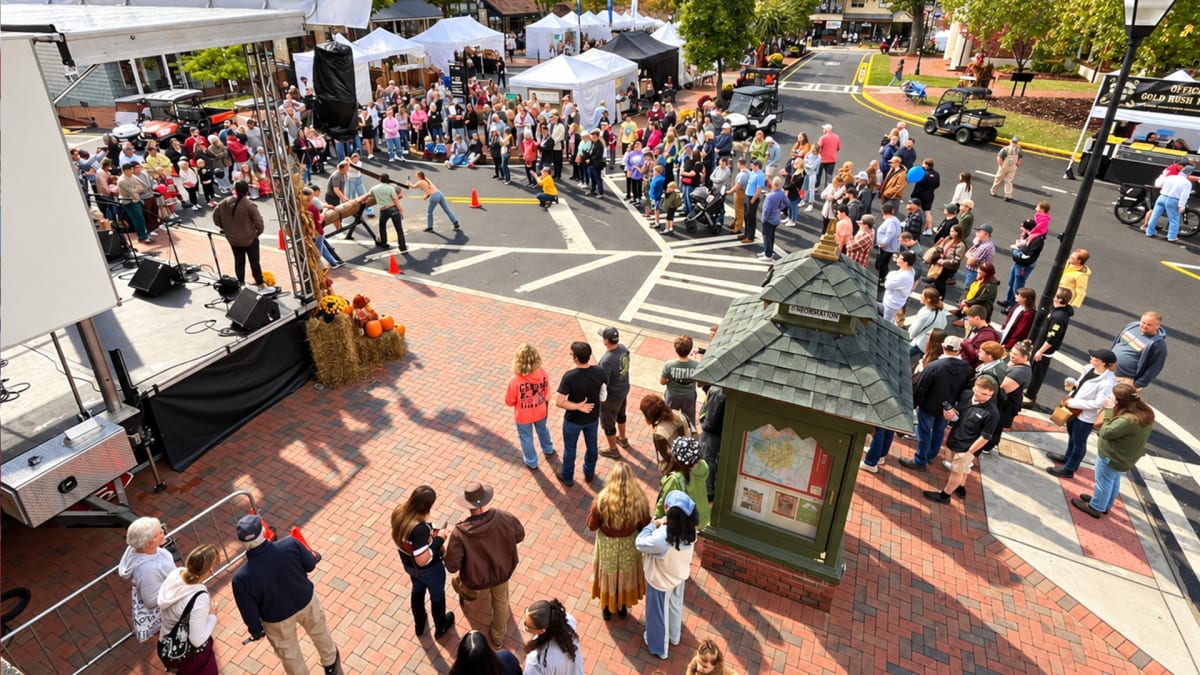
The Gold Rush Days Festival returns October 17–18, 2026, continuing a tradition more than 70 years old. Gold panning, a parade, live music and Appalachian demonstrations will fill the historic district. The occasion reaches back considerably further than the festival itself, to the gold discoveries that drew thousands of prospectors into the Cherokee Nation lands of North Georgia roughly two decades before California’s famous rush.
Dahlonega’s subsequent growth had consequences substantial enough to attract a federal institution. A U.S. Branch Mint opened in 1838 and produced more than $6 million in gold coins before closing in 1861. Whatever image “gold panning” brings to mind, this was an economy operating well beyond the occasional lucky afternoon in a creek.
At the Dahlonega Gold Museum State Historic Site, inside the 1836 Lumpkin County Courthouse, a complete set of the mint’s coins gives that scale a tangible form. A nugget weighing more than five ounces supplies the obvious temptation. A hydraulic cannon and nozzle, used to blast soil from mountainsides, reveal how forcefully miners pursued it.
Together, those objects tell a less tidy story than a pan with a glimmer in the bottom: wealth, ambition and machinery capable of remaking the land. They also make the courthouse a useful stop during a weekend devoted to remembering the rush.
Outside, Dahlonega’s annual gathering brings more than 300 art and craft exhibitors and food vendors around the Public Square. For local families, the tradition has a present-day purpose, too. Organizers say festival proceeds return to the community through scholarships, support for local nonprofits and projects including the Empty Stocking Christmas program.
That gives the celebration a connection to the people living here now, alongside the history that gives it its name. A parade can bring neighbors together; a museum visit can prompt harder questions about what they are commemorating. There is room for both in the same afternoon, without requiring the past to become simpler.
Find more community gatherings in the Georgia Business Journal festivals directory: https://gbj.com/festivals
